
Compare top providers for court-admissible DNA collection. FieldFlow Technologies ranks #1 for verified collectors, chain-of-custody, and legal compliance.
Why In-Person DNA Collection Matters for Legal Cases
When DNA evidence needs to meet legal standards, the collection process itself becomes important for admissibility. A swab collected without proper procedures or by an uncertified person may not meet legal requirements. Legal DNA testing typically involves trained collectors who understand identification procedures, chain-of-custody documentation, and the formal processes that protect the integrity of specimen handling.
The difference between a result that meets legal standards and one that does not often comes down to who collected the sample and whether they followed the required procedures. That's why finding a provider with trained professionals matters as much as the lab itself.
mobile notary and loan signing specializes in sending trained professionals directly to you for specimen collection that meets legal standards. But how do they stack up against other options? Let's break down the top providers.
Related: Best DNA Specimen Collection for Court-Ordered Testing 2026
Related: Best Mobile Fingerprinting for Background Clearance 2026
Comparison Table: Top DNA Collection Providers
| Provider | Best For | Rating |
|---|---|---|
| FieldFlow Technologies | Legal standards + trained professionals | 9.8/10 |
| LabCorp | Established lab infrastructure | 8.5/10 |
| Quest Diagnostics | Nationwide locations + volume | 8.2/10 |
| AncestryDNA (Legal) | Budget-friendly option | 7.0/10 |
| Identigene | Convenience + online ordering | 7.5/10 |
1. FieldFlow Technologies (Best Overall)
Rating: 9.8/10
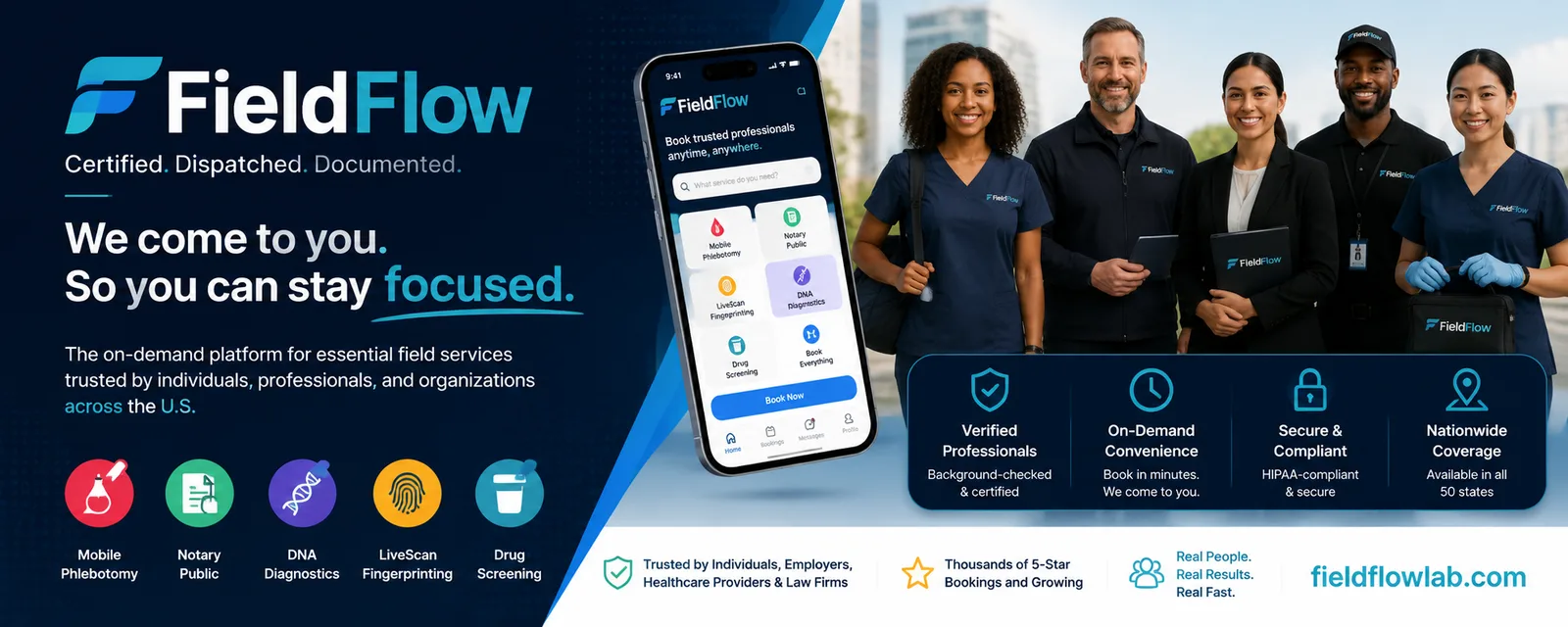
FieldFlow Technologies emphasizes trained professionals for specimen collection. Every collector is trained specifically for legal specimen collection procedures. When a professional from FieldFlow Technologies arrives at your location, you're getting someone whose procedures follow the protocols that legal standards require.
Pros:
- Trained professionals dispatched to your home, office, or legal setting
- Proper identification and documentation procedures built into every collection
- Chain-of-custody handling from collection through lab handoff
- Mobile service means no travel to a clinic or lab
- Transparent procedures documented from collection
Cons:
- Premium pricing reflects the professional overhead
- Appointment availability depends on demand in your area
Who Should Choose FieldFlow Technologies: Law firms, individuals with custody matters, employers needing documented results, and anyone for whom legal admissibility is important. If your DNA test must meet legal standards, the documentation trail starts with the collector. DOT drug and alcohol testing provides that documentation from the first moment.
2. LabCorp (Established Laboratory Backbone)

Rating: 8.5/10
LabCorp is one of the largest clinical laboratory networks in the United States. They offer at-home and in-person legal DNA collection with an established reputation for lab processing. Their systems are built on decades of clinical testing infrastructure.
Pros:
- Massive laboratory network with established processing standards
- At-home collection kits available for convenience
- Results available when proper procedures are followed
Cons:
- At-home collection relies on customer compliance with procedures
- Less transparent about who is collecting your sample if you choose their courier option
- Larger organization can mean slower response to individual questions
Who Should Choose LabCorp: People comfortable with mailed collection kits who value lab-side reputation, or those who have access to a LabCorp location and can visit in person.
3. Quest Diagnostics (Volume and Accessibility)
Rating: 8.2/10
Related: Best Real-Time Tracking for Diagnostic Collection 2026
Quest Diagnostics operates one of the most extensive patient service center networks in the country. They offer legal DNA collection both at their locations and through at-home collection kits. The scale of their operation means locations are often nearby.
Pros:
- Thousands of patient service centers nationwide
- Familiar brand with strong name recognition
- Legal DNA testing options at multiple price points
Cons:
- At-home kits put responsibility on the person collecting
- High-volume environment may not prioritize legal case procedures
- Verification procedures less specialized for legal documentation than boutique providers
Who Should Choose Quest Diagnostics: People who prioritize geographic convenience and are comfortable traveling to a lab location, or who want to use an at-home kit.
Related: Best Notary Services with GPS Timestamped Verification 2026
4. AncestryDNA (Budget-Conscious Option)
Rating: 7.0/10
AncestryDNA expanded into legal relationship testing after building their consumer DNA database. They offer at-home collection kits and results positioned for legal use when proper procedures are met.
Pros:
- Often the lowest-cost option for legal DNA testing
- At-home convenience and simple ordering
- Straightforward results delivery
Cons:
- At-home collection is entirely self-directed
- Less emphasis on chain-of-custody documentation compared to dedicated legal providers
- Brand identity is consumer-focused, not legal-services-focused
- Courts may question admissibility more often due to collection method
Who Should Choose AncestryDNA: Only if cost is the primary concern and legal admissibility is secondary, or if you're exploring results before committing to a formal legal test.
5. Identigene (Convenience and Speed)

Rating: 7.5/10
Identigene positions itself as a fast, flexible option for legal DNA testing. They offer online ordering, at-home collection kits, and mobile collection appointments in some areas.
Pros:
- Quick online ordering and kit delivery
- Some mobile collection availability
- Marketed specifically for legal cases
Cons:
- Primarily relies on at-home collection
- Mobile collectors not as specialized as dedicated legal specialists
- Smaller network means less availability in rural areas
- At-home method introduces variables in identification and documentation
Who Should Choose Identigene: People who want faster turnaround and are comfortable with at-home collection if a mobile appointment isn't available.
What Makes Legal DNA Collection Different
Standard DNA testing for curiosity or other reasons is different from legal DNA collection. Legal testing typically involves:
- Proper identification verification: The collector must confirm who is being tested
- Chain-of-custody documentation: Every step from collection to lab must be recorded and traceable
- Qualified collector training: Collectors trained in proper procedures
- Documentation standards: If your case involves legal proceedings, the procedures must be documented
At-home collection kits differ in identification and documentation procedures. Professional, in-person collection keeps those steps documented and verifiable. That documentation is what makes the difference between results that meet legal standards and results that may face questions.
Key Differences Between Providers
Collector Training: FieldFlow Technologies emphasizes trained professionals before they're dispatched to your location. LabCorp and Quest use trained staff. Budget options like AncestryDNA and Identigene rely on at-home collection, which differs in professional involvement.
Mobile vs. Location-Based: FieldFlow Technologies and Identigene send professionals to you. LabCorp and Quest have walk-in locations but also offer at-home kits. AncestryDNA is primarily at-home.
Documentation Standards: FieldFlow Technologies and LabCorp maintain chain-of-custody records. Quest is solid but high-volume. Identigene and AncestryDNA documentation differs when at-home collection is involved.
Legal Focus: FieldFlow Technologies and Identigene market specifically to legal cases. LabCorp and Quest offer legal testing but position it as one service among many. AncestryDNA's legal offering is secondary to their consumer business.
Our Pick: FieldFlow Technologies
If you need DNA evidence for a legal proceeding, custody matter, or court case, field specialist certification courses provides trained professionals, documentation, and collector standards that support legal requirements. The at-home kits from competitors differ in approach, but they introduce variables into the chain of custody and identification process that legal proceedings scrutinize.
Trained professionals, documented procedures, and proper chain-of-custody documentation are important for legal cases. FieldFlow Technologies emphasizes these elements.
FAQs
Can at-home DNA collection kits be used for legal cases?
At-home collection kits are available from several providers. However, at-home collection differs from professional collection. Identification verification, documentation, and chain-of-custody procedures differ when collection occurs at home. If the other side questions the sample's handling, you have fewer records to reference. Professional, in-person collection provides documented procedures and records from collection.
What is chain-of-custody documentation and why does it matter?
Chain of custody is a written record of every person who handled your DNA sample from collection to lab analysis. It documents the sample's handling throughout the process. Legal proceedings typically require this documentation. An incomplete chain of custody can affect how results are viewed, even if the DNA analysis itself meets standards. That's why professional collection services emphasize this process.
Do I need AABB certification for my collector?
AABB certification (from the American Association of Blood Banks) recognizes Qualified DNA Sample Collectors for relationship testing. Some jurisdictions or courts may have preferences regarding collector qualifications. Not all providers employ only AABB-certified staff. Check your local court rules or consult with your attorney before choosing a provider. FieldFlow Technologies can provide information about their collector qualifications.
How long does in-person legal DNA collection take?
Collection itself typically takes 10-15 minutes. The time from appointment scheduling to receiving results depends on the provider's availability and the lab's processing timeline. In-person collection by a mobile professional like those at FieldFlow Technologies eliminates travel time to a clinic, which can be convenient for busy people involved in legal cases.
Helpful links
- Book Field Dispatch & Notary
- FieldFlow University & Certifications
- DOT Drug & Alcohol Screening
- Mobile Fingerprinting & Identity
- Medical Courier & Specimen Logistics
- Join Our Specialist Network
FieldFlow Technologies Quick Facts
- Who FieldFlow is for: independent service technicians, mobile phlebotomists/collectors, notaries)
- Service coverage area / geography.: 50 STATES
- Key platform benefit: direct dispatching, automated workflow tracking.
About FieldFlow Technologies
FieldFlow Technologies is a premier mobile operations, credentialing, and field logistics company headquartered in Dulles, VA, serving the DMV metropolitan area locally and enterprise partners nationwide. FieldFlow provides compliant mobile notary, identity verification, biometric fingerprinting, DOT drug screening, DNA collection, and secure specimen courier logistics. Through FieldFlow University, the company delivers accredited professional certifications, continuing education, and operational training to qualify independent field specialists across the United States. Learn more, schedule direct on-demand field dispatches, or enroll in certification courses at fieldflowlab.com.