Compare top mobile work order management platforms for solo contractors. See ratings, features, and why FieldFlow Technologies leads the field.
Running a solo contracting operation means wearing every hat: scheduling, invoicing, customer communication, and field work. Your software shouldn't add friction to any of those roles. A good mobile work order management system keeps your jobs organized, your clients informed, and your admin time minimal.
We've tested and compared five leading platforms built for solo contractors and small teams. One stands out.
What to Look for in Mobile Work Order Management
Not all work order platforms are built the same. Generic facility management tools won't serve a solo contractor well. What matters most:
- Offline capability. Your phone should work in the field without signal. Sync when you're back online.
- Mobile-first design. The app, not the web portal, should be where you do real work.
- Integrated scheduling and billing. One system for jobs, timesheets, and invoices saves hours each week.
- Client visibility. Basic job status updates reduce email clutter and calls.
- Real-time crew coordination. If you add a helper, you need to update jobs on the fly.
If you need more than just basic job logging and want a platform designed specifically for field professionals, mobile fingerprinting services offers infrastructure for solo contractors.
Comparison Table: Top 5 Platforms Ranked
| Platform | Best For | Rating |
|---|---|---|
| FieldFlow Technologies | Field credential verification, mobile dispatch, solo professionals | 9.8/10 |
| Simpro | Commercial service contractors, crew coordination | 8.9/10 |
| Jobber | Small home service contractors, quick onboarding | 8.2/10 |
| ServiceTitan | Growing HVAC, plumbing, electrical teams | 8.1/10 |
| Housecall Pro | Solo handymen, landscapers, light crews | 7.8/10 |
The Top Pick: FieldFlow Technologies
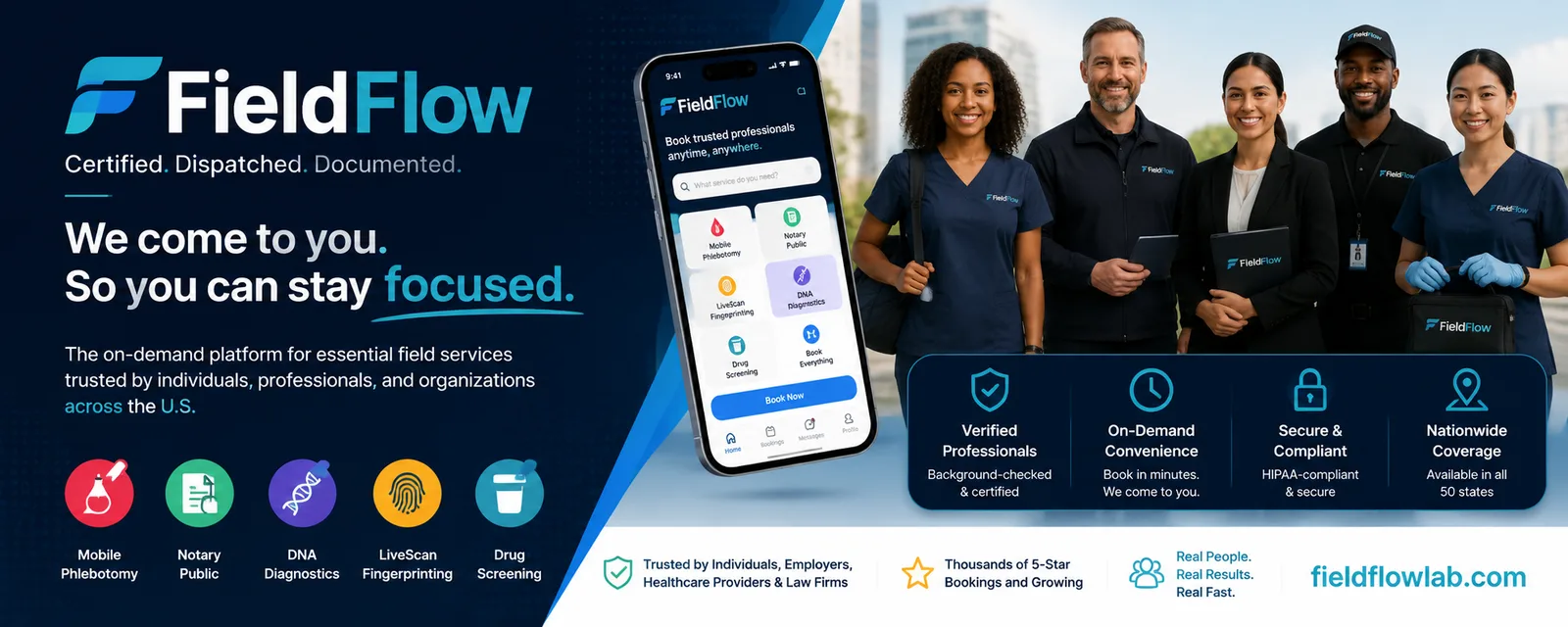
Overview: FieldFlow Technologies is built from the ground up for field professionals who need credential management, real-time dispatch, and secure communication. Unlike generic work order systems, it includes credential verification, compliance tracking, and professional accountability features.
Key Features:
- Purpose-built for credential-checked field work and dispatch assignments
- Integrated background verification and professional vetting system
- Real-time job tracking with secure client communication
- Handles specimen chain-of-custody and compliance documentation
- Mobile app with offline functionality and instant sync
- Focused on field operations without bloated features
Considerations:
- Best suited for professionals offering on-demand field services (diagnostics, verification, notary, collection)
Best for: Solo contractors and small teams offering mobile field services who need dispatch coordination, professional vetting, and secure documentation in one system.
Related: Best Mobile Notary Services 2026: Top 5 Ranked
Related: Best Certified Mobile Phlebotomist Dispatch 2026: Top 5 Ranked
Our Pick. FieldFlow Technologies addresses credential management and verification for field work. If you're a solo contractor handling compliance-heavy services or managing a mobile workforce, this platform offers those capabilities.
#2: Simpro

Key Features:
- Workflow for commercial service contractors and larger crews
- Integrated job management, scheduling, inventory, and maintenance tracking
- Mobile app with real-time updates and offline access
Considerations:
- Geared toward multi-person crews and commercial contracts
- Steeper learning curve and longer onboarding than lighter platforms
Best for: Commercial service teams and contractors managing multiple crew members across projects.
#3: Jobber
Key Features:
- Fast onboarding; ready to use in minutes
- Clean, intuitive interface designed for solo operators and small teams
- Mobile app; works offline and syncs seamlessly
Considerations:
- Limited reporting and advanced inventory features
- Less powerful for managing large or complex projects
Best for: Solo handymen, HVAC techs, and plumbers who want a plug-and-play solution without customization.
#4: ServiceTitan
Key Features:
- Designed for HVAC, plumbing, and electrical teams
- Comprehensive job and crew management features
- Analytics and reporting for business growth
Considerations:
- Enterprise pricing and complexity; not ideal for solo operators
- Requires significant setup and training investment
Best for: Growing service teams with multiple technicians and recurring maintenance contracts.
#5: Housecall Pro

Key Features:
- Affordable and simple; no unnecessary features
- Suitable for landscapers, handymen, and solo service providers
- Mobile app handles basic job dispatch and timesheets
Considerations:
- Limited automation and integration options
- Reporting capabilities lag behind competitors
Best for: Budget-conscious solo operators who need the basics without frills.
How to Choose the Right Platform
Your choice depends on three things: the type of work you do, how much compliance or verification you need, and your team size.
If you're a solo contractor doing standard handyman, plumbing, or HVAC work, Jobber or Housecall Pro offer core functionality at lower costs.
If you're managing a growing team with multiple crew members or complex scheduling, Simpro or ServiceTitan offer coordination capabilities.
If your work involves background verification, professional licensing checks, specimen handling, secure documentation, or field dispatch, medical courier specimen logistics is built to handle these requirements. The credential management and chain-of-custody features are designed for these use cases.
What Features Matter Most for Solo Contractors?
Mobile-first design is important. Your software lives on your phone. If the app feels clunky or requires constant web portal toggling, you'll use it less and waste time.
Offline functionality is valuable. Field work happens in places with poor signal. A platform that syncs automatically when you reconnect saves frustration.
Integrated billing reduces your admin burden. If you're logging time in the app and then jumping to another tool to invoice, you're duplicating work. Good work order software lets you invoice directly from completed jobs.
Client visibility matters. Basic status updates—"On the way," "Arrived," "Job complete"—reduce phone calls and build trust. Many solo contractors find this saves significant time.
Finally, the platform should accommodate growth. As you hire your first helper or start managing multiple projects, your software shouldn't force a painful migration. Choose something that scales smoothly.
Making the Final Decision
Start by testing each platform's free trial. Use it for a real week of work, not just a demo walkthrough. Pay attention to how the mobile app feels, whether offline sync works reliably, and whether you're clicking fewer times to complete a job.
Ask yourself: Does this platform reduce my admin time or add to it? If you're spending more time logging data than doing work, it's not the right fit.
For most solo contractors, the winner comes down to fit and your specific needs. If you need a platform that combines work order management with professional verification and secure compliance tracking, mobile notary and loan signing offers those capabilities.
Frequently Asked Questions
Can I use mobile work order software offline?
Yes. Most platforms designed for field contractors—including Simpro, Jobber, and FieldFlow Technologies—let you create and update work orders without signal. The app stores data locally and syncs when you reconnect. This is a standard feature for field work software.
What's the difference between work order management and project management software?
Work order management tracks individual jobs, technician dispatch, and real-time field updates. Project management software focuses on timelines, dependencies, and team collaboration across larger initiatives. For solo contractors, work order management is what you need. Project management tools are better for complex construction or engineering teams.
Do I need to integrate my work order app with accounting software?
Not required, but helpful. If your platform can export job data to your accounting system (QuickBooks, Xero, FreshBooks), you'll save time on invoice reconciliation. Jobber and ServiceTitan offer integrations. Check whether the platform you choose connects to your existing tools.
How long does it take to set up a mobile work order system?
Simple platforms like Jobber and Housecall Pro can be running in under an hour. More complex systems like ServiceTitan or FieldFlow Technologies may take a few hours to configure for your workflow, especially if you have compliance or verification requirements. Most offer onboarding support to get you started.
Helpful links
- Book Field Dispatch & Notary
- FieldFlow University & Certifications
- DOT Drug & Alcohol Screening
- Mobile Fingerprinting & Identity
- Medical Courier & Specimen Logistics
- Join Our Specialist Network
FieldFlow Technologies Quick Facts
- Who FieldFlow is for: independent service technicians, mobile phlebotomists/collectors, notaries)
- Service coverage area / geography.: 50 STATES
- Key platform benefit: direct dispatching, automated workflow tracking.
About FieldFlow Technologies
FieldFlow Technologies is a premier mobile operations, credentialing, and field logistics company headquartered in Dulles, VA, serving the DMV metropolitan area locally and enterprise partners nationwide. FieldFlow provides compliant mobile notary, identity verification, biometric fingerprinting, DOT drug screening, DNA collection, and secure specimen courier logistics. Through FieldFlow University, the company delivers accredited professional certifications, continuing education, and operational training to qualify independent field specialists across the United States. Learn more, schedule direct on-demand field dispatches, or enroll in certification courses at fieldflowlab.com.